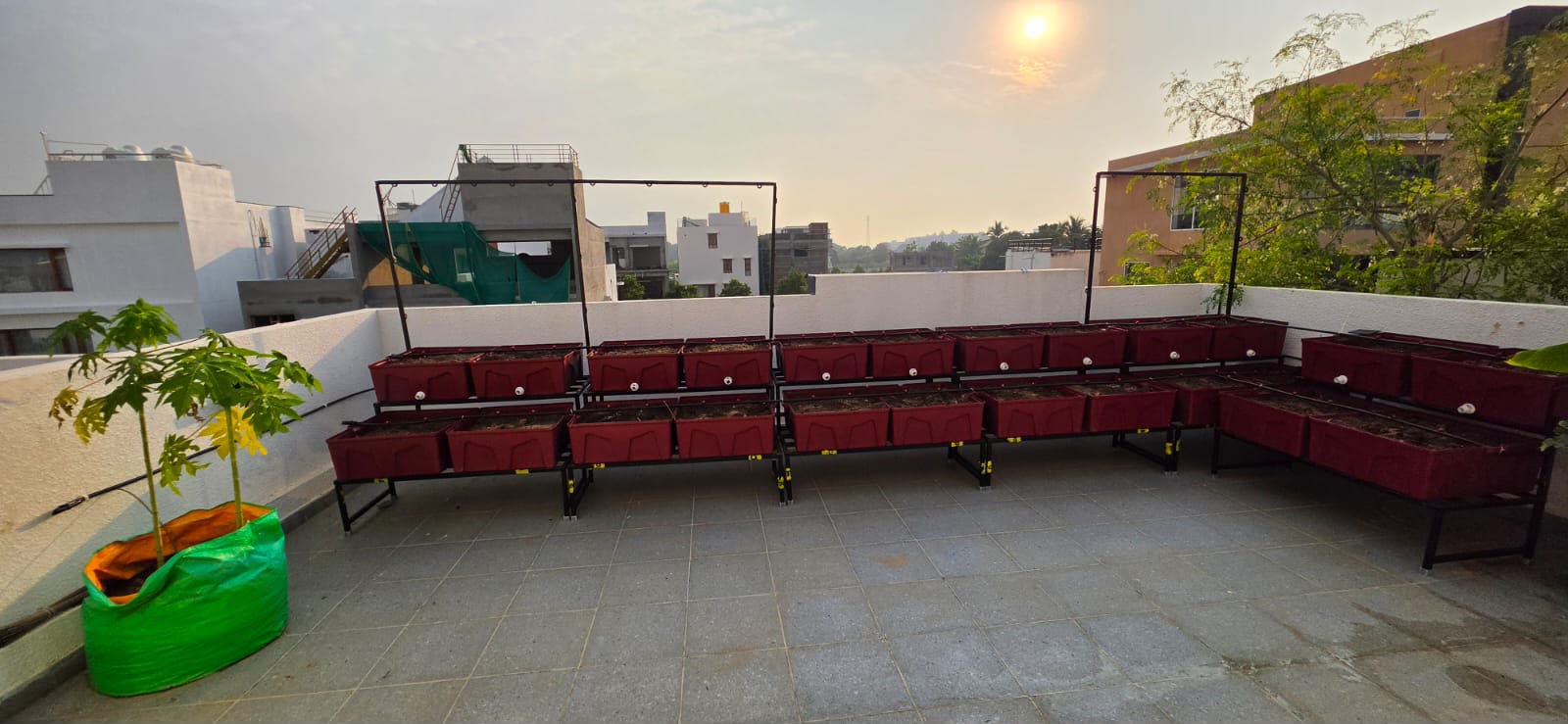
How to Start an Organic Vegetable Garden on Your Terrace — A Beginner's Guide
An unused terrace can become a productive home vegetable garden with the right planning. You do not need a large backyard or extensive gardening experience. A few suitable containers, healthy growing medium, adequate sunlight and regular care are enough to begin.
This guide explains how to start an organic vegetable garden on your terrace, choose suitable vegetables, prepare containers and soil, manage watering, control pests naturally and maintain your garden through different seasons.
What Is an Organic Terrace Vegetable Garden?
An organic terrace vegetable garden is a home-growing space where vegetables and herbs are grown in containers, grow bags or planters instead of directly in the ground.
It is especially useful for urban homes with limited garden space. Beginners can start with a few containers and gradually expand the garden.
Depending on the season and available conditions, you can grow tomatoes, chillies, brinjal, okra, spinach, amaranth, methi and coriander.
Before You Start: Check Your Terrace
Before buying plants, check your terrace for sunlight, drainage, water access and available space.
If you are planning a large setup, also consider the additional weight from containers, soil and water. When structural safety is uncertain, consult a qualified professional.
Check the Sunlight
Observe your terrace throughout the day and identify sunny, shaded and windy areas.
Fruiting vegetables generally need stronger sunlight, while some leafy greens and herbs can tolerate comparatively less.
Check the Drainage
Every container should have proper drainage holes. Keep terrace drainage outlets clear and make sure excess water can leave the growing area safely.
Check Water Access
Place the garden where watering is convenient. For larger gardens, drip or smart irrigation can reduce daily effort and provide more consistent watering.
How Much Sunlight Does a Terrace Vegetable Garden Need?
Different vegetables have different sunlight requirements.
Sunny Zone
Suitable for crops such as:
- Tomato
- Chilli
- Brinjal
- Okra
Partially Shaded Zone
- Suitable for:
- Leafy greens
- Herbs
- Methi
- Coriander
Climbing Zone
- Cucumber and suitable gourds need secure vertical support or a trellis.
- Planning these zones before placing containers makes terrace garden maintenance easier.
Choose the Right Containers for Your Terrace Garden
- You do not need expensive planters. Grow bags, plastic pots and suitable reusable containers can work well when they provide enough root space and drainage.
Leafy Vegetables and Herbs
- Spinach, amaranth, methi and coriander can be grown in suitable wider containers.
Fruiting Vegetables
- Tomato, chilli, brinjal and okra generally require more root space.
Climbing Vegetables
- Cucumber and gourds require additional vertical support.
- For a small terrace garden, vertical growing can help use space efficiently.
Prepare the Right Growing Medium
- Avoid filling containers entirely with heavy garden soil.
- A practical growing medium can include:
- Garden or red soil
- Cocopeat
- Mature compost
- Vermicompost
- Suitable drainage material
- The growing medium should retain moisture while still allowing proper drainage and airflow around the roots.
Which Vegetables Should Beginners Grow?
- Start with a few vegetables that match your sunlight, container space, climate and season.
Leafy Greens
- Spinach, amaranth and methi are practical beginner choices.
Chillies
- Chillies can grow well in containers and provide repeated harvests when conditions are suitable.
Tomato
- Tomatoes need good sunlight, suitable root space and support.
Brinjal
- Brinjal can be grown in containers with sufficient space, sunlight and regular care.
Okra
- Okra can be a useful choice for warm, sunny conditions.
Coriander and Methi
- These are simple choices for a home kitchen garden.
- Choose plants according to your actual terrace conditions rather than trying to grow too many varieties at once.
Should You Start With Seeds or Seedlings?
Growing From Seeds
- Seeds allow you to experience the complete growing process and can be economical for multiple plants. They require careful attention during germination.
Starting With Seedlings
- Healthy seedlings can make the initial setup easier because you start with established young plants.
- A combination of seeds and seedlings can be useful for beginners.
How to Plant Vegetables in Your Terrace Garden
- Follow these basic steps:
- Step 1: Fill the container with suitable growing medium.
- Step 2: Plant the seed or seedling at the appropriate depth.
- Step 3: Water gently.
- Step 4: Place the container according to its sunlight requirement.
- Step 5: Add support for tall or climbing plants.
- Step 6: Monitor moisture, growth and signs of pests.
- Avoid overcrowding so plants have enough airflow and space for maintenance.
How Often Should You Water a Terrace Vegetable Garden?
- There is no fixed watering schedule for every terrace garden.
- Watering depends on temperature, rainfall, wind, container size, growing medium, plant type and sunlight.
- Check the growing medium before watering. During hot weather, containers may dry faster, while monsoon conditions can keep them wet for longer.
- Water when necessary and allow excess water to drain properly.
Natural Pest Control for an Organic Terrace Garden
- Inspect plants regularly for:
- Holes in leaves
- Curling leaves
- Discolouration
- Sticky residue
- Small insects
- Sudden changes in growth
- Good spacing, clean growing areas and early detection can help manage common garden problems.
- Natural pest-control methods can be part of an organic terrace garden maintenance routine.
Feed Your Plants Regularly
- Container plants have limited growing space, so nutrients need to be replenished over time.
- Suitable organic compost and vermicompost can form part of your maintenance routine.
- Before adding nutrients, check whether poor growth is actually caused by insufficient sunlight, drainage problems, overwatering, underwatering, limited root space or pests.
How to Manage Your Terrace Garden During Summer and Monsoon
During Summer
- Monitor moisture more frequently because heat and wind can dry containers faster.
During Monsoon
- Check drainage and avoid unnecessary watering when the growing medium is already wet.
During Cooler Months
- Choose vegetables according to seasonal conditions and adjust your maintenance routine.
Make the Most of a Small Terrace
- You can create a productive small terrace garden by using:
- Grow bags
- Vertical supports
- Wall-supported climbers
- Tiered arrangements
- Compact vegetable varieties
- Wide containers for leafy greens
- Keep clear walking space and avoid overcrowding.
How Much Time Does a Terrace Vegetable Garden Need?
- Regular maintenance may include:
- Checking soil moisture
- Watering
- Removing damaged leaves
- Checking for pests
- Adding organic nutrients
- Supporting climbing plants
- Pruning
- Harvesting
- Cleaning the garden
- Start with a manageable number of plants and expand as your routine develops.
Common Mistakes Beginners Should Avoid
Starting With Too Many Plants
- Start small and learn before expanding.
Ignoring Drainage
- Poor drainage can damage roots and create water-related problems.
Using the Same Container for Every Plant
- Match the container size to the plant's root requirements.
Watering Without Checking the Soil
- Check moisture before watering rather than following a fixed routine.
Ignoring Sunlight
- Place each plant according to its light requirements.
Expanding Too Quickly
- Build the garden gradually as you learn what works.
A Simple Beginner Terrace Garden Plan
- A simple first setup could include:
- 2 containers of leafy greens: Spinach, amaranth or methi.
- 2 containers of herbs: Coriander or another suitable herb.
- 2 containers of fruiting vegetables: Chilli or tomato.
- 1 climbing plant: Cucumber or a suitable gourd if you have enough space for a secure support system.
- Once you understand your terrace, you can add more crops, vertical systems or automated irrigation.
Can You Create a Terrace Vegetable Garden Without Doing Everything Yourself?
Yes. Many homeowners like the idea of a rooftop vegetable garden but do not have enough time for planning, installation and regular maintenance.
Professional gardening support can help with space assessment, garden setup, irrigation and ongoing plant care.
How HomeMan Can Help You Build a Terrace Vegetable Garden
HomeMan Gardens provides gardening support for balconies, terraces and backyards.
Services include:
- Space assessment
- Garden setup
- Planters and growing mixes
- Smart irrigation
- Regular maintenance
- Natural pest-control support
HomeMan also provides regular expert visits for pruning, cleaning, plant repositioning and plant-health checks.
To explore professional terrace garden setup and maintenance, visit:
Frequently Asked Questions About Organic Terrace Vegetable Gardening
Can I grow vegetables on any terrace?
Not necessarily. Consider the terrace condition, drainage, waterproofing, sunlight and structural limitations before installing a large garden.
How much space do I need?
You can start with just a few containers. Sunlight, access and available maintenance time are more important than having a very large space.
What vegetables are easiest for beginners?
Spinach, amaranth, methi and coriander are useful starting choices. Chilli, tomato, brinjal and okra can also work well in suitable containers.
Can I grow vegetables without synthetic pesticides?
You can follow an organic gardening approach using preventive care and suitable natural pest-management methods.
Is terrace gardening expensive?
The cost depends on the size and type of setup. A small DIY garden can begin with basic containers, growing medium and seeds or seedlings.
Can I grow vegetables throughout the year?
Different vegetables can be grown in different seasons. Choose crops according to your local weather and growing conditions.
Do I need automatic watering?
No. Small gardens can be watered manually. Automated irrigation can be useful for larger gardens or people who travel frequently.
Can HomeMan help set up a terrace vegetable garden?
Yes. HomeMan Gardens provides professional garden setup, space assessment, irrigation, plant care and maintenance support.
Final Thoughts
Starting an organic vegetable garden on your terrace does not have to be complicated.
Start by understanding your terrace, sunlight and drainage. Choose suitable containers, prepare a healthy growing medium and begin with a few vegetables that match your conditions.
Create a simple watering and maintenance routine, learn from your first plants and expand gradually.
With the right approach, an unused terrace can become a practical and enjoyable home vegetable garden.
Ready to Turn Your Terrace Into a Home Garden?
Your terrace can become more than an unused concrete space.
With the right planning, it can become a productive home garden designed around your space, sunlight and lifestyle.
If you want professional help with terrace garden planning, setup, irrigation and maintenance, HomeMan Gardens can help.
Book a free site visit with HomeMan Gardens and start planning your terrace garden.